
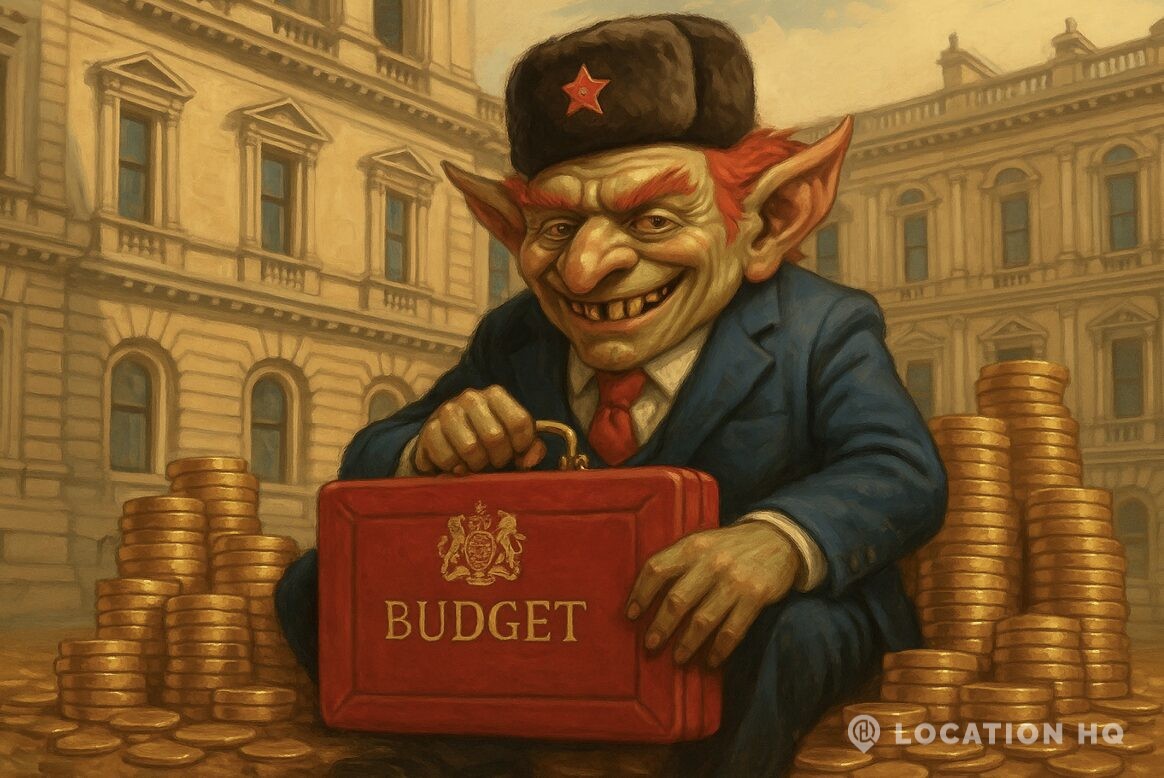
This image is not representative of any person. Neither do we think that the government has any gold; they spent everything! There were no gingers harmed in the making of this image.
Warning: As ever, this blog is written anonymously, because the internet is a cruel place. I am not stupid, but I’m not that smart either. I am not a film specialist. I am not an economist. I’m too good-looking to be an accountant. I am not a tax solicitor. I am not a tax advisor. I’m truly unqualified to write this or give any advice. This article is not written about anyone in particular and is simply a highly subjective view. I am a swing voter. I am not political. I recommend you read the budget yourself.
INTRODUCTION
The UK Budget 2025 arrived with the usual lines about “fairness,” “stability,” and “supporting working people.” But I will bottom line it; the poor will be better off, the upper class will leave or restructure, and the middle class will pay for everything.
The UK Government Budget 2025 is sold as good for growth, but for real people on the street, it feels like the opposite. Given all the government PR about boosting business and “growth”, there is very little in here to boost business. But it’s a socialist government, so it was all reasonably predictable. So, if the last businessperson leaving the country could please put the cat out, thanks.
For all you film-makers, you will be paying more. But there is a little Labour Party love here for the film industry, which wasn’t forgotten.
This UK Budget 2025 quietly:
- Raises taxes without raising the rates
- Squeezes freelancers and PSC directors,
- Leaves Londoners exposed to higher rents
- Increases location fees with the mansion tax (a de-facto UK Budget 2025 property tax on high-value homes)
- Weakens pension advantages for freelancers and PSC’s
- Puts downward pressure on real crew wages through inflation and fiscal drag
THIS IS THE FILM CREW SURVIVAL GUIDE
DEFINITIONS
BoE: Bank of England: Controls interest rates; its stance affects mortgages, borrowing, and the cost of production finance.
CPI: Consumer price index.
Freelancer / Sole Trader: Self-employed. More control but endless file filing.
GBP: The pound sterling; if it strengthens, UK shoots become more expensive for USD-funded productions.
Gilt Market: Where the UK sells government debt; influences borrowing rates and production financing.
HVPS: High Value Property Surcharge. Mansion tax. New council tax premium on properties valued above £2 million.
NI: National Insurance
NICs: National Insurance Contributions.
OBR: Office for Budget Responsibility.
PAYE: Pay As You Earn. Zero personal control, but also zero hassle.
PSC: Personal Service Company. A one-person Limited Company. Often a better tax position, but administration-heavy. Generally preferred by higher crew earners.
PART 1: BUDGET HIGHLIGHTS
1. INCOME TAX THRESHOLDS FROZEN UNTIL 2031
Personal Allowance remains £12,570; higher-rate threshold remains £50,270 under the UK budget 2025 income tax changes.
This is a stealth tax; more income drifts upward into higher tax bands every year due to inflation and fiscal drag (tax brackets UK talk, but no movement).
Crew recommendation: Look at your rate carefully and increase it by 5-10%. But expect a good fight with production.
2. NIC THRESHOLDS FROZEN UNTIL 2031
NIC limits frozen effectively raises NI for workers as wages rise with inflation. Hits PAYE and freelancers simultaneously through higher National Insurance contributions (NIC UK, tax and NI pain for everyone).
3. DIVIDEND TAX RATES INCREASE
From April 2026:
- Basic-rate dividend tax increases from 8.75% → 10.75%
- Higher-rate dividend tax increases from 33.75% → 35.75%
A direct blow to PSC directors and freelancers.
Crew recommendation: Get what you can now. Decrease what you pay yourself to avoid the higher rate. Re-look at your dividend and salary payment balance, considering these UK tax changes.
4. SALARY SACRIFICE CLAMPDOWN
For years, one of the smartest tax moves available to higher-earning crew operating at £60k+ was to use salary sacrifice to shove a large chunk of income directly into their pension.
This did two things:
- Lowered your taxable income
- Avoided NIC
This helped push pension responsibilities onto individuals, which suited the government. Used heavily by freelancers and PSC’s across film and TV where income can be choppy, seasonal, or project-based. From April 2029, the government will cap the NI-saving benefit of salary sacrifice. Only the first £2,000 per year of sacrificed pension contributions will continue to avoid NI. A major tax rise on long-term savings.
Crew recommendation: Get what you can in now, before these pension changes 2025 fully bite.
5. HIGH-VALUE PROPERTY SURCHARGE OVER £2M
A new supplementary council tax premium from 1 April 2028. This is effectively part of the UK Budget 2025 property tax changes. This will be felt by locations and productions. This covers many film locations, which will likely increase location rates.
Crew recommendation: Budget for increases.
Location recommendations: Look at overheads. Consider sensible, slow location rate increases.
6. 40% BUSINESS RATES RELIEF FOR FILM STUDIOS UNTIL 2034
A huge, confirmed measure supporting UK film infrastructure and one of the few clear 2025 budget winners in the creative sector. Eligible studios get a 40% reduction on their business-rate bills until 2034. Don’t get me wrong, council rates are our largest business tax each year and inescapable if you have property. They are the most damaging growth killer in the UK. They throttle all industries.
7. VAT: NO CHANGES FOR FILM
- No changes to VAT rates.
- No cultural VAT reforms.
- No film specific VAT measures.
Crew recommendation: Register for VAT. It’s a pain, but during a time of increasing costs, this will offset some of your costs.
8. OBR INFLATION FORECAST 3–4%
Inflation continues to erode real wages. Combined with frozen thresholds, means a significant real pay decline and a real‑world UK cost of living 2025 squeeze on crew.
9. GILT MARKET STABILISATION
Budget reduces borrowing; gilt yields soften. Lower borrowing costs to cheaper production and studio financing, a hidden positive in the wider UK budget 2025 economic outlook.
10. BANK OF ENGLAND REMIT CONFIRMED
2% CPI mandate stays. Budget conditions make rate cuts more likely later in the year. Making borrowing cheaper.
PART 2: HOW THIS BUDGET HITS CREW, FREELANCERS & PSC DIRECTORS
THE FISCAL DRAG EFFECT
This is the real tax rise of the decade. Inflation forces wages up; tax thresholds stay frozen. More income is taxed at higher rates automatically. They call it ‘fiscal sustainability.’ We call it what it is: a tax rise.
PAYE CREW
- More income taxed at 40%
- NIC burden increases
- Real take-home pay falls 3–6%
- Cost-of-living increases
FREELANCERS
- Higher tax as thresholds freeze
- Expenses are worth less in real terms
- Cost of living increases
- Profit margins shrink
- Increased admin costs
PSC DIRECTORS
- Dividend tax rise
- NI relief cap for pensions
- Frozen thresholds hit both salary and dividends
- Shrinking benefit of the PSC model
- Increased admin costs
LOCATIONS
- Dividend tax rise
- Higher tax as thresholds freeze
- Expenses are worth less in real terms
- Cost of living increases
- Profit margins shrink
- The shrinking benefit of the PSC model
- More income is taxed at 40%
- Increased admin costs
LONDON CREW ARE HIT THE HARDEST
Most UK film work is London-based, and the UK Budget 2025 does nothing for London’s cost-of-living crisis or UK rent inflation. I think they missed a trick here, the London film industry is full of fine young socialists, who vote for them, they should have been better looked after, given they are a strong Labour voter base.
1. RENTS RISING
The high-value property surcharge landlords of £2m+ homes raise rents. Even renters in “cheaper” properties feel the ripple effect.
Expected rent increase: +5–8%
2. INFLATION VS TAX DRAG
With thresholds frozen, pay increases barely keep up with inflation but trigger higher tax bills. No where is this felt more than in London and that’s before you factor in any future UK budget 2025 pensioners / benefits tweaks that don’t touch working‑age crew.
PART 3: FILM INDUSTRY SPECIFIC MEASURES & MACROECONOMIC EFFECTS
- 40% BUSINESS RATES RELIEF FOR FILM STUDIOS
This is the Budget’s single largest pro-film measure.
A long-term, ten-year incentive is encouraging:
- studio expansion
- foreign investment
- more stage space
- more long-term productions
- stronger job stability for crew
This is the Budget’s strongest “creative industry” win.
- GILT MARKET & PRODUCTION FINANCE
Lower projected borrowing → gilt yields dip.
That means:
- cheaper short-term production loans
- cheaper financing for studios
- cheaper equipment leasing
- cheaper loans for VFX facilities and post houses
This is a subtle but important benefit for production economies that won’t show up in most UK budget news 2025 headlines.
- THE BANK OF ENGLAND & INTEREST RATES
This Budget positions the government as fiscally disciplined.
This encourages the MPC toward rate cuts:
- Lower inflation projections
- Reduced borrowing
- Stable fiscal policy
For the film industry:
- Freelancers see cheaper mortgages
- Studios can borrow more cheaply
- Productions get cheaper bridge finance
- Post houses can upgrade equipment more easily
- We can update our kit more easily
WHAT THIS LOOKS LIKE IN OUR NUMBERS
| Worker Type | £50k Take-Home (2024-2025) | £50k Take-Home (2026/27) | Change | £100k Take-Home (2024-2025) | £100k Take-Home (2026/27) | Change |
| PAYE | £39,800 | £38,300 | –£1,500 | £66,000 | £63,000 | –£3,000 |
| Freelance | £38,200 | £36,700 | –£1,500 | £63,500 | £59,800 | –£3,700 |
| PSC Director | £39,500 | £37,900 | –£1,600 | £65,200 | £61,500 | –£3,700 |
Why losses occur:
- Threshold freezes (income tax thresholds, basic tax rate, higher‑rate tax unchanged)
- Higher dividend tax
- Inflation
RECOMMENDATIONS
FOR ALL CREW
- Seek 5–10% rate increases
- Forward tax plan, treat this as your own mini tax planning UK exercise
- Register for VAT and offset these increased taxes
- Your accountant isn’t a tax specialist (despite what they say), get a decent tax solicitor.
- Track expenses more closely. No, the bottom of your car does not eat receipts!
- Build cash buffers
- Reevaluate pension strategy in line with the new pension budget rules
FOR FREELANCERS
- Review sole trader vs PSC (Self-Employed UK vs Company)
- Adjust rates for cost-of-living
- Reassess expenses
- Strengthen accounting discipline
FOR PSC DIRECTORS
- Recalculate salary/dividend ratio under the new UK dividend tax rules
- Adjust pension strategy before 2029
- Maintain spotless bookkeeping
- Review whether PSC is still optimal
FOR PRODUCERS
- Budget for higher location fees (thanks to the de facto UK property tax budget 2025 shift)
- Expect the crew to negotiate harder
- Leverage studio business-rate relief
- Monitor GBP for USD productions
- Secure financing early while rates fall
It could have been much worse. It should settle the markets, they look like reasonably steady hands, which likely saved their jobs. As crew, we will need to belt-tighten, look for promotions, refine our processes and increase our rates. PSCs and Freelancers lose dividend benefit, and we face higher costs across every part of our working and home lives thanks to these UK tax rises.
CONCLUSION
Yet, at the same time, the UK remains viable as a film capital. Free AI video creation is looking less viable each day. Borrowing costs fall. Interest rates are likely to drop. This has been a bruising few years for us, but we aren’t broken, and the economic fundamentals are improving.
FURTHER READING
Budget & Economic Analysis
• HM Treasury — Budget 2025 Overview
• Institute for Fiscal Studies — Budget Commentary
• Office for Budget Responsibility — Economic Outlook
Tax & Income
• Gov.uk — Income Tax & NIC
• Gov.uk — Dividend Tax
• MoneyHelper — Pension & Salary Sacrifice
Property
• Gov.uk — Council Tax & Property
Film & Creative Industries
• BFI — Industry Statistics
• Creative Industry Tax Reliefs
Markets & Finance
• Bank of England — Interest Rates
• UK Debt Management Office — Gilts